
The global out-of-home advertising market surpassed $44 billion in 2024 and is growing at 8% annually, mainly driven by DOOH (Digital Out-of-Home), which already represents 35% of the industry’s revenue. In LATAM, cities like São Paulo, Mexico City, Bogotá, and Lima concentrate the region’s largest digital billboard inventory and are attracting investment from regional and international brands seeking high-impact visibility.
But the industry faces a perception battle: 89% of media planners cite measurement as their main concern when considering OOH. In a world where CMOs demand attribution for every dollar invested, OOH needs to sell differently than it did 10 years ago.

Media planning in mid-sized LATAM companies follows a predictable pattern: digital budgets are assigned first because they are easier to measure and defend internally, and whatever remains goes to other channels, including OOH. By the time the OOH operator arrives with a proposal, 70-80% of the budget already has a destination. OOH companies that participate in planning conversations from the beginning of the budgeting cycle, with audience data and proposals integrated into the advertiser’s digital strategy, gain access to the full budget rather than leftovers.
The media agency sales model has a structural margin ceiling: agencies keep between 15% and 25% of the investment, while OOH operators compete against all available inventory in a purchasing process driven by price. Operators that developed direct-to-brand sales channels generate margins 30% to 50% higher for the same locations. Channel diversification does not eliminate agencies. It simply makes them one of several channels instead of the only one.
In LATAM, OOH investment is highly seasonal: Q4 represents between 40% and 45% of annual revenue for many operators, driven by holiday campaigns and year-end promotions. The first half of the year is structurally weaker, especially January and February. Operators that smoothed this curve did so with two strategies: annual contracts with discounts guaranteeing year-round presence and activating low-season categories such as government, education, and healthcare that plan budgets in Q1.
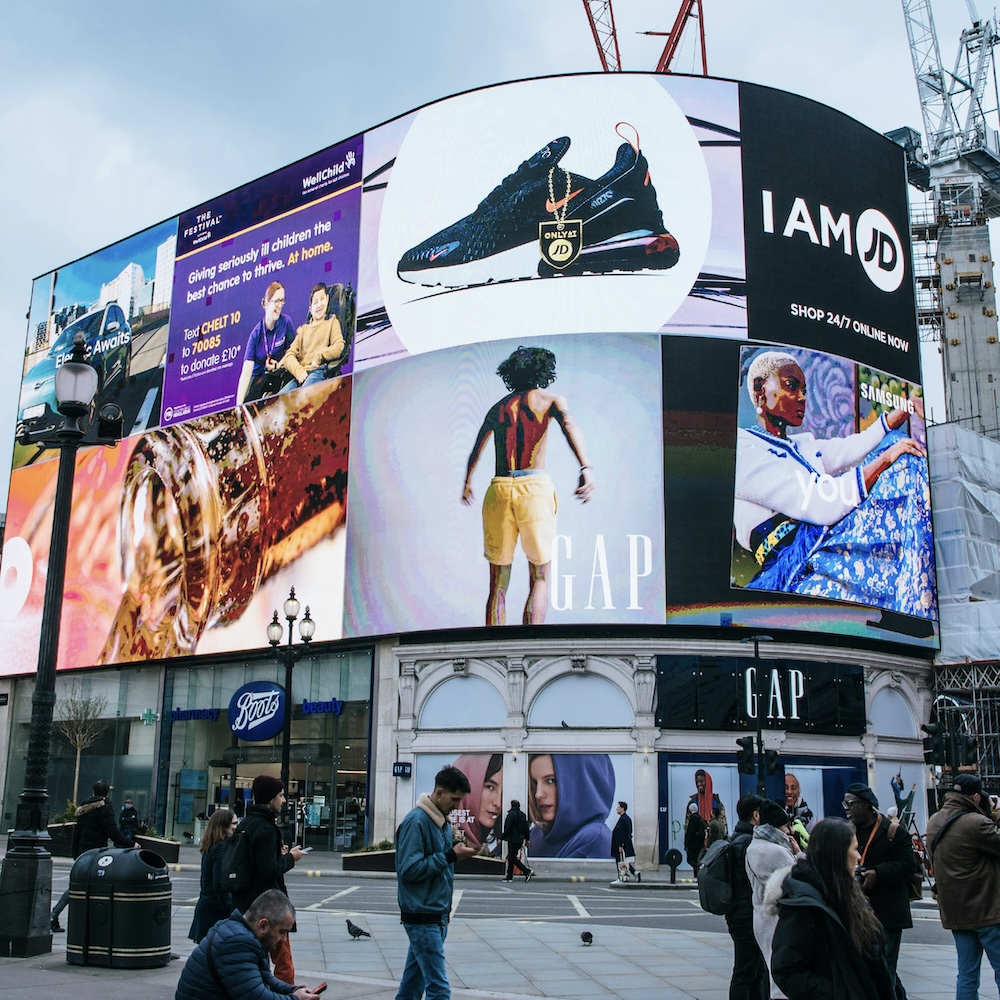
The growth of DOOH created a new type of buyer: digital media planners who now manage programmatic screen budgets but evaluate them using display advertising metrics such as CPM, viewability, and frequency. The issue is that programmatic DOOH does not work like display: frequency is population-based rather than individual, location context is part of the value, and dynamic creativity is what differentiates DOOH from static OOH. Operators that educate these buyers on the right metrics before selling are the ones building long-term relationships in a fast-growing channel.

By changing the comparison metric, not by trying to replicate digital ROAS. OOH and digital do not operate at the same stage of the funnel: digital captures existing demand, OOH creates new demand. Comparing ROAS between them is like comparing the impact of an in-store salesperson with the billboard that made the customer enter the store. Advertisers who best understand OOH measure it through brand lift, retail footfall studies, and correlations between investment and branded search growth. Arriving with one of these measurement methodologies prepared for the prospect’s industry resolves the objection before it appears.
By creating value the agency cannot replicate. Media agencies are efficiency intermediaries: they buy scale and negotiate prices. What they cannot offer is local context, creative integration with the physical environment, proprietary audience data from specific zones, or special point-of-sale activations. OOH operators that built direct brand relationships did so by offering activation proposals that go beyond the billboard itself: immersive experiences, integration with surrounding retail, and mobility data unavailable elsewhere.
Those with relevant physical distribution and active brand budgets. The categories with the highest direct OOH conversion are retail chains, banking and financial services, telecommunications, automotive, and residential or commercial real estate. Consumer brands have the highest ticket sizes but are also the most agency-driven. The most effective entry point for direct sales is mid-sized brands with annual budgets between $50K and $500K that do not yet have an established AOR.
SIE7E. Copyright © 2026. All rights reserved.